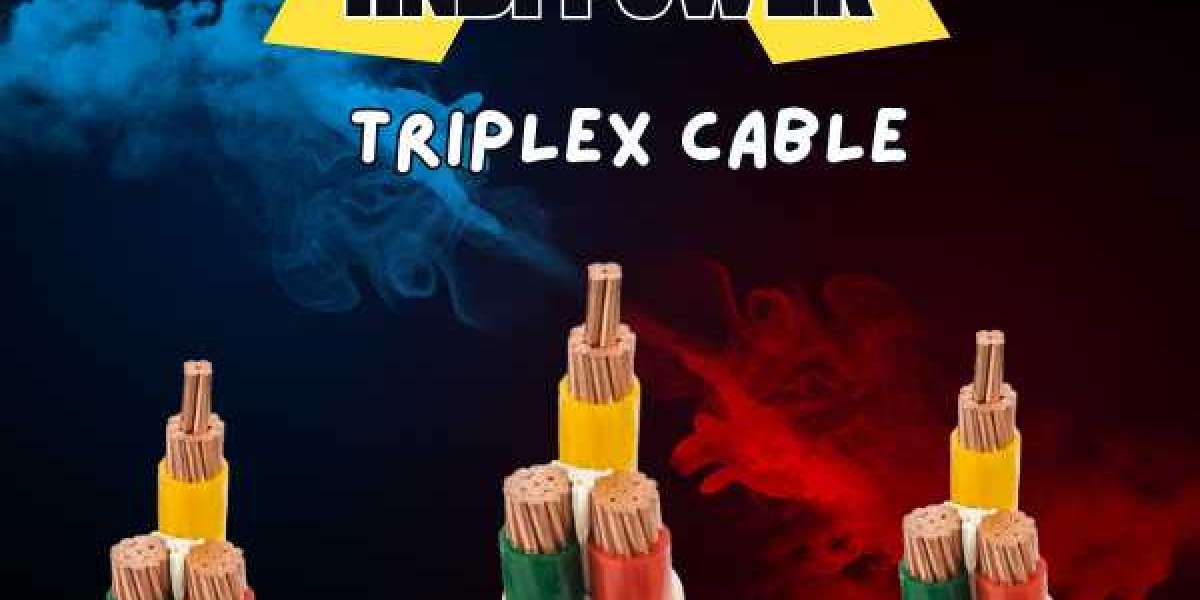

Triplex cable is a critical component in modern overhead secondary distribution networks, especially for utility companies, EPC contractors, and industrial power projects. Designed for durability, electrical performance, and cost efficiency, triplex cables are widely used to deliver power from pole-mounted transformers to residential, commercial, and light industrial service points. For engineers and procurement buyers, understanding triplex cable construction, specifications, and sourcing considerations is essential for long-term grid reliability.
What Is Triplex Cable?
Triplex cable is an overhead aluminum conductor assembly consisting of two insulated phase conductors twisted around a bare or insulated neutral messenger. The neutral conductor also serves as the mechanical support for the cable system. This configuration allows for safe, compact, and efficient secondary power distribution in low-voltage networks.
At HNBF Power, triplex cable is manufactured in compliance with international utility standards, ensuring consistent electrical performance and mechanical strength for diverse grid environments.
Key Construction Features of Triplex Cable
Phase Conductors
The phase conductors are typically made from aluminum conductors (AAC or AAAC) and insulated with cross-linked polyethylene (XLPE) or polyethylene (PE). These materials provide excellent resistance to heat, UV exposure, and weathering.
Neutral Messenger
The neutral messenger is commonly an AAC or ACSR conductor. It is designed to carry unbalanced current while supporting the full mechanical load of the cable span.
Insulation Performance
Triplex cable insulation is engineered for abrasion resistance, moisture protection, and long service life in outdoor installations. This is particularly important for overhead lines exposed to harsh environmental conditions.
Applications in Power Distribution Networks
Triplex cable is mainly used in:
Secondary overhead distribution from transformers to service drops
Residential and commercial power supply lines
Rural electrification projects
Temporary or permanent overhead power installations
Utilities prefer triplex cable due to its reduced installation time, lower hardware requirements, and improved safety compared to traditional bare conductor systems.
Engineering Advantages of Triplex Cable
Improved Safety
Insulated phase conductors significantly reduce the risk of accidental contact and electrical faults, enhancing line safety in populated areas.
Cost-Effective Installation
The compact, self-supporting design minimizes the need for additional spacers and crossarms, lowering overall project costs.
High Mechanical Strength
With a strong neutral messenger, triplex cable performs well under wind, ice loading, and long-span conditions.
Reduced Line Losses
Optimized conductor sizing and aluminum material help maintain efficient current flow with minimal energy losses.
Procurement Considerations for Utility Buyers
When sourcing triplex cable, engineers and procurement teams should evaluate:
Conductor size and ampacity requirements
Neutral messenger type (AAC or ACSR)
Insulation material and voltage rating
Compliance with utility and international standards
Manufacturer quality control and testing capabilities
HNBF Power supports utility buyers with consistent manufacturing, strict quality inspections, and flexible customization options to match project specifications.
Why Choose HNBF Power for Triplex Cable?
As a global manufacturer of overhead conductors and power cables, HNBF Power delivers triplex cable solutions designed for long-term grid performance. Our production capabilities cover a wide range of conductor sizes, insulation types, and custom configurations to meet utility and EPC project requirements worldwide. With a strong focus on engineering reliability and supply consistency, we help power infrastructure projects stay on schedule and within budget.
Frequently Asked Questions (FAQs)
Q1: What voltage levels are triplex cables typically used for?
Triplex cables are mainly used for low-voltage secondary distribution, commonly up to 600V.
Q2: Can triplex cable be customized for specific utility standards?
Yes, HNBF Power can manufacture triplex cable according to regional and utility-specific technical requirements.
Q3: What is the difference between triplex cable and ABC cable?
Triplex cable is typically used for secondary distribution with two phase conductors, while ABC cable is commonly used for primary distribution with multiple insulated phases.
Q4: Is ACSR neutral better than AAC for triplex cable?
ACSR neutrals offer higher tensile strength, making them suitable for longer spans and harsher mechanical conditions.
Partner with HNBF Power
Selecting the right triplex cable is essential for safe, efficient, and durable power distribution networks. Contact HNBF Power today to discuss your technical requirements and receive customized triplex cable solutions tailored to your utility or infrastructure project needs.