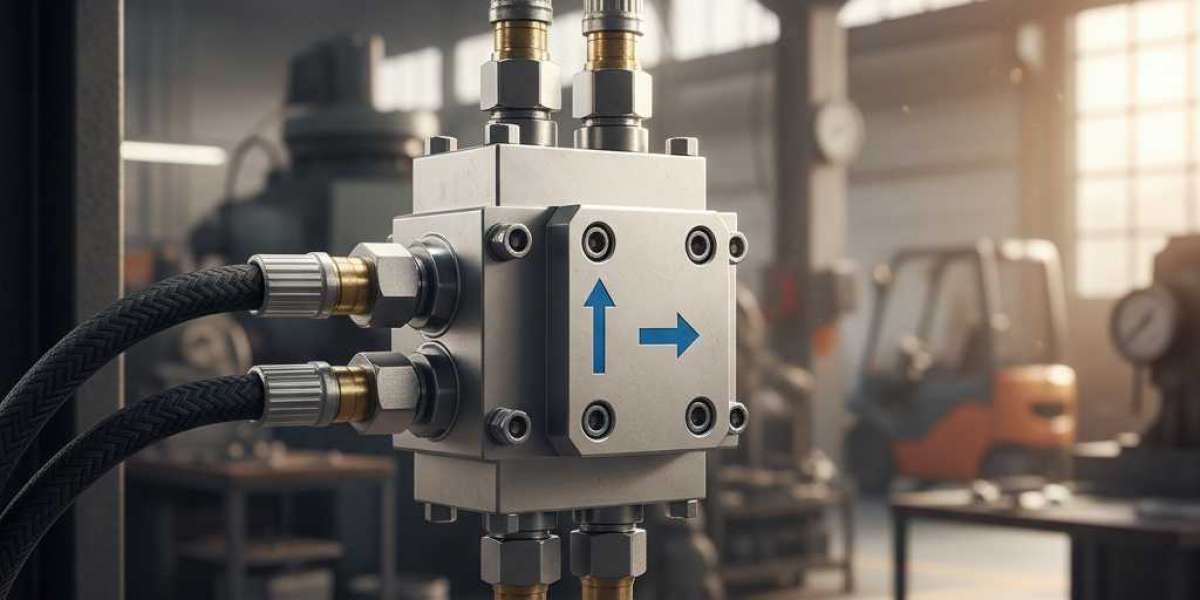

Hydraulic systems power everything from manufacturing machinery to agricultural tractors and construction cranes. At the center of these powerful systems lies one crucial component — the directional control hydraulic valve. This small yet vital device determines how and where hydraulic fluid flows, enabling motion, force, and control in countless machines.
For industrial buyers and engineers, understanding directional control valves isn’t just about choosing a part — it’s about ensuring performance, reliability, and long-term system efficiency. This guide explores how these valves work, the types available, their applications, and how to select the right one for your needs.

1. What Are Directional Control Hydraulic Valves?
A directional control hydraulic valve regulates the direction of fluid flow within a hydraulic circuit. Simply put, it decides which path the pressurized oil takes — whether it goes to extend a cylinder, retract it, or hold it in position.
Every hydraulic system relies on fluid movement to transmit power. The directional control valve acts like a traffic signal, ensuring oil moves where it’s needed, when it’s needed. Without it, hydraulic energy would have no controlled direction, leading to inefficient or even unsafe operation.
How It Works
Inside the valve body, a spool moves within machined passages. This spool opens or blocks different ports, allowing fluid to flow between the pump, actuator, and tank lines. The valve’s configuration — typically 2-way, 3-way, or 4-way — determines how many flow paths it controls.
The valve may be manually operated, electrically actuated, or even hydraulically/pneumatically piloted depending on system design.
2. Key Components and Operation
Each directional valve includes the following key elements:
Valve Body: The main housing where all internal flow channels are machined.
Spool: A precisely machined cylindrical piece that slides inside the body to open or close flow paths.
Actuator: Moves the spool. It can be a lever, solenoid coil, pilot pressure, or mechanical linkage.
Return Spring: Ensures the valve returns to a neutral position when the actuator is released.
Seals and Ports: Prevent leakage and connect the valve to hoses or manifolds.
In operation, when the actuator moves the spool, the ports connect differently — directing fluid to either extend or retract a cylinder. When the spool returns to neutral, the flow stops or returns to the tank, depending on the valve type.
For example:
In a 4/3 closed center valve, all ports are blocked in neutral, holding the actuator in place.
In a 4/3 open center valve, fluid flows freely to the tank in neutral, preventing energy buildup.
3. Main Types of Directional Control Valves
Directional valves come in various configurations, depending on how many flow paths they control and how they’re actuated.
By Flow Paths
2-Way Valves:
Simplest type — allows or blocks flow. Common in basic on/off control.3-Way Valves:
Directs fluid between pump, actuator, and tank — used in single-acting cylinders.4-Way Valves:
The standard for double-acting cylinders, managing both extend and retract motions.
By Construction
Monoblock Valves:
One-piece design, compact and durable. Great for mobile equipment where simplicity and space matter.Sectional Valves:
Built from multiple sections, allowing customization of flow paths and functions. Ideal for complex industrial or agricultural systems.
By Actuation Method
Manual Valves: Lever or handle-operated — cost-effective and reliable for straightforward machinery.
Solenoid Valves: Electrically controlled for automation and remote operation.
Pilot-Operated Valves: Use hydraulic or pneumatic signals to shift the spool — perfect for large systems requiring high flow.
Proportional Servo Valves: Offer precise, variable control of flow and pressure — essential in modern automated systems.
Each type has its advantages depending on your application’s size, control needs, and environment.
4. Applications Across Industries
Directional control valves are everywhere hydraulic power is used. Let’s look at how they fit into key sectors:
1. Manufacturing Automation
In industrial presses, conveyor systems, and robotic arms, these valves control the exact motion sequence. Solenoid and proportional valves are preferred for their precision and speed, often integrated with PLC systems.
2. Construction Heavy Equipment
Excavators, cranes, and loaders depend on directional valves for movement and lifting. Monoblock valves handle high flow and pressure, giving operators smooth control over massive loads.
3. Agriculture
Tractors, harvesters, and sprayers rely on valves to lift implements, steer, or operate attachments. Sectional valves allow multiple functions — raising a plow while operating a hydraulic trailer, for instance.
4. Material Handling Logistics
Forklifts, pallet stackers, and hydraulic lifts use compact directional valves to manage lifting, tilting, and steering functions.
5. Marine Energy
In ship steering, winch systems, and offshore platforms, corrosion-resistant directional valves ensure safe, reliable control under extreme conditions.
Whether stationary or mobile, every hydraulic system’s efficiency depends on how well its directional valves control the flow.
5. Choosing the Right Directional Control Valve
Selecting the right valve is critical for system performance and safety. Here’s what industrial buyers should evaluate:
Operating Pressure and Flow Rate:
Match the valve’s rating to the system’s working pressure and flow requirements.Port Size and Type:
Ensure compatibility with existing fittings — common standards include BSP, SAE, and metric threads.Control Method:
Manual, electrical, or pilot operation depending on how automated your system is.Mounting and Configuration:
Subplate or line-mounted — compact systems often favor monoblock designs.Fluid Compatibility:
Ensure the valve materials (steel, aluminum, cast iron) suit your hydraulic oil and operating temperature.Environment:
For outdoor or marine use, corrosion-resistant coatings and IP-rated solenoids are a must.Maintenance Accessibility:
Easy-to-service valves save downtime and operating costs.
When in doubt, consult an expert to match specifications with your equipment’s needs — a small mismatch can lead to performance losses or early wear.
6. Installation and Maintenance Best Practices
Even the best valves can underperform if not installed or maintained properly.
Follow these tips for optimal operation:
Cleanliness is everything. Contaminated oil is the number one cause of hydraulic failure.
Check orientation and mounting. Always install valves as per manufacturer instructions to avoid flow restriction.
Use correct torque. Over-tightening can distort the body or damage threads.
Inspect regularly. Look for leaks, vibration, or sluggish movement.
Replace seals periodically. Rubber components degrade with time and temperature.
Use the right fluid. Wrong viscosity or degraded oil affects valve performance and heat management.
Routine maintenance ensures your directional valve remains precise and responsive for years.
7. The Future of Directional Control Valves
As industries embrace digital transformation, hydraulic systems are evolving too.
Modern directional valves are no longer just mechanical components — they’re becoming smart, data-driven devices.
Electrohydraulic and proportional valves now integrate sensors for real-time feedback.
IoT-enabled systems monitor temperature, flow, and position to predict failures.
AI-based control optimizes valve timing for energy savings and smoother motion.
These innovations bring hydraulic efficiency closer to electronic precision, offering better control with less waste.
For industrial buyers, adopting smart hydraulic valves means reduced downtime, easier troubleshooting, and longer equipment life — a win for both productivity and cost savings.
8. Frequently Asked Questions (FAQs)
Q1: What does a directional control valve do in a hydraulic system?
It directs hydraulic fluid to different parts of the system, controlling movement and pressure. Without it, your system can’t control motion or load effectively.
Q2: How do I know which type of directional valve I need?
Determine your system’s flow rate, pressure, and control type. For simple lifting, a manual 4-way valve may suffice; for automation, choose solenoid or proportional models.
Q3: What causes hydraulic valve failure?
The most common issues include contaminated oil, worn seals, overheating, and incorrect installation or pressure overload.
Q4: Can directional valves be automated?
Yes — solenoid and electrohydraulic valves are widely used for remote or automated control in industrial setups.
Q5: How often should I service hydraulic valves?
Inspect every 6–12 months depending on system use. Replace seals and filters regularly and test for leaks or sluggish response.
Q6: What’s the difference between open and closed center valves?
Open-center valves allow oil to flow freely when neutral; closed-center valves block flow, holding actuators steady under load.
Q7: Can one valve control multiple functions?
Yes — sectional valves allow several spools to control different functions simultaneously, ideal for tractors and multi-purpose machinery.
9. Conclusion
Directional control hydraulic valves are the backbone of modern hydraulic systems.
They transform raw pressure into precise motion, delivering safety, accuracy, and strength across industries.
For industrial buyers, the right valve means more than flow control — it means reliability, efficiency, and productivity. Whether you’re upgrading equipment or designing a new system, invest in high-quality directional control valves engineered for your specific application.
The result?
Less downtime, smoother performance, and a hydraulic system that works as hard as you do.